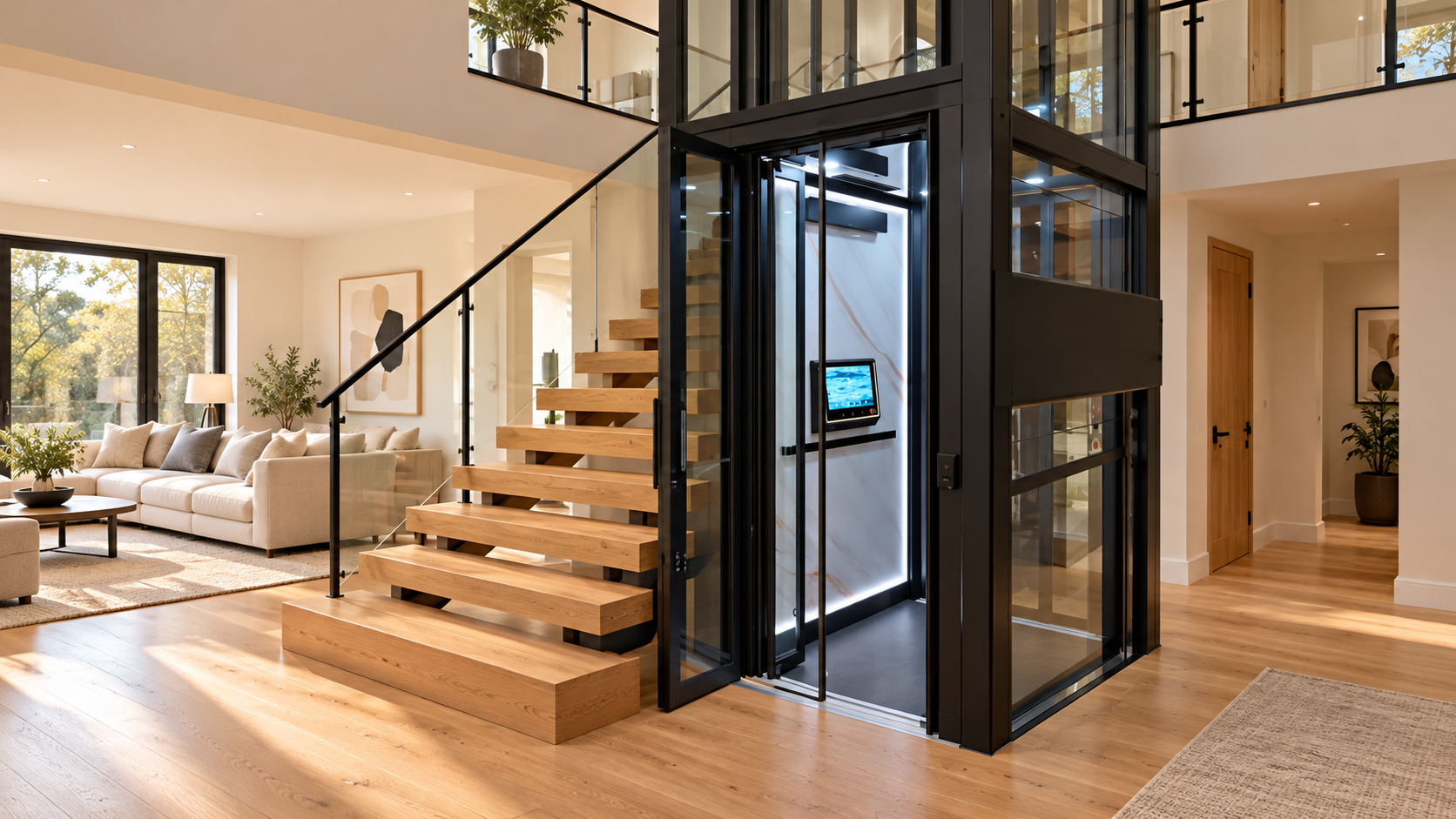
US buyers most often compare home elevator brands. The major elevator manufacturing companies in the US are Cibes Symmetry, Savaria, Stiltz, and Pneumatic Vacuum Elevators. Otis, KONE, Schindler, and TK Elevator are well-known brands but are more aligned with commercial elevators, though many operate in the multifamily space, which is also considered a type of residential real estate. Below, we take you through the best home elevator companies in the US. These are companies that manufacture elevators, not resellers or distributors.
Who are the best home elevator companies in the US?
The main home elevator companies on a practical US shortlist are Cibes Symmetry, Savaria, Stiltz, and Pneumatic Vacuum Elevators. Each brand uses a different approach to its products. Cibes Symmetry and Savaria offer home elevator solutions across multiple categories (traditional, shaftless, through-the-floor), while Stiltz and Pneumatic Vacuum offer more specialized home elevator solutions.
Some sell products in multiple categories. The table below provides a round-up:
| Manufacturer | Main drive systems | Home elevator types | Known for |
|---|---|---|---|
| Cibes Symmetry | Screw, inline gear, and hydraulic, depending on model | Traditional residential, through-the-floor, and luxury | A broad US and Swedish-made range with more than 50 US dealer locations |
| Savaria | Geared chain traction, hydraulic, geared rope traction, and winding drum | Traditional residential and panoramic glass | Several traditional drive choices plus the Vuelift panoramic range |
| Stiltz | Self-contained electric wire-rope hoist | Through-the-floor Duo and Trio models | A self-supporting dual-rail system for compact home installations |
| Pneumatic Vacuum Elevators | Pneumatic air-pressure system | Panoramic cylindrical and Cube-style home elevators | Self-supporting transparent designs that move using differences in air pressure |
Sources: Current manufacturer product pages and technical materials from Cibes Symmetry, Savaria, Stiltz, and Pneumatic Vacuum Elevators, reviewed September 2026. Product availability and approved configurations vary by location.
Cibes Symmetry
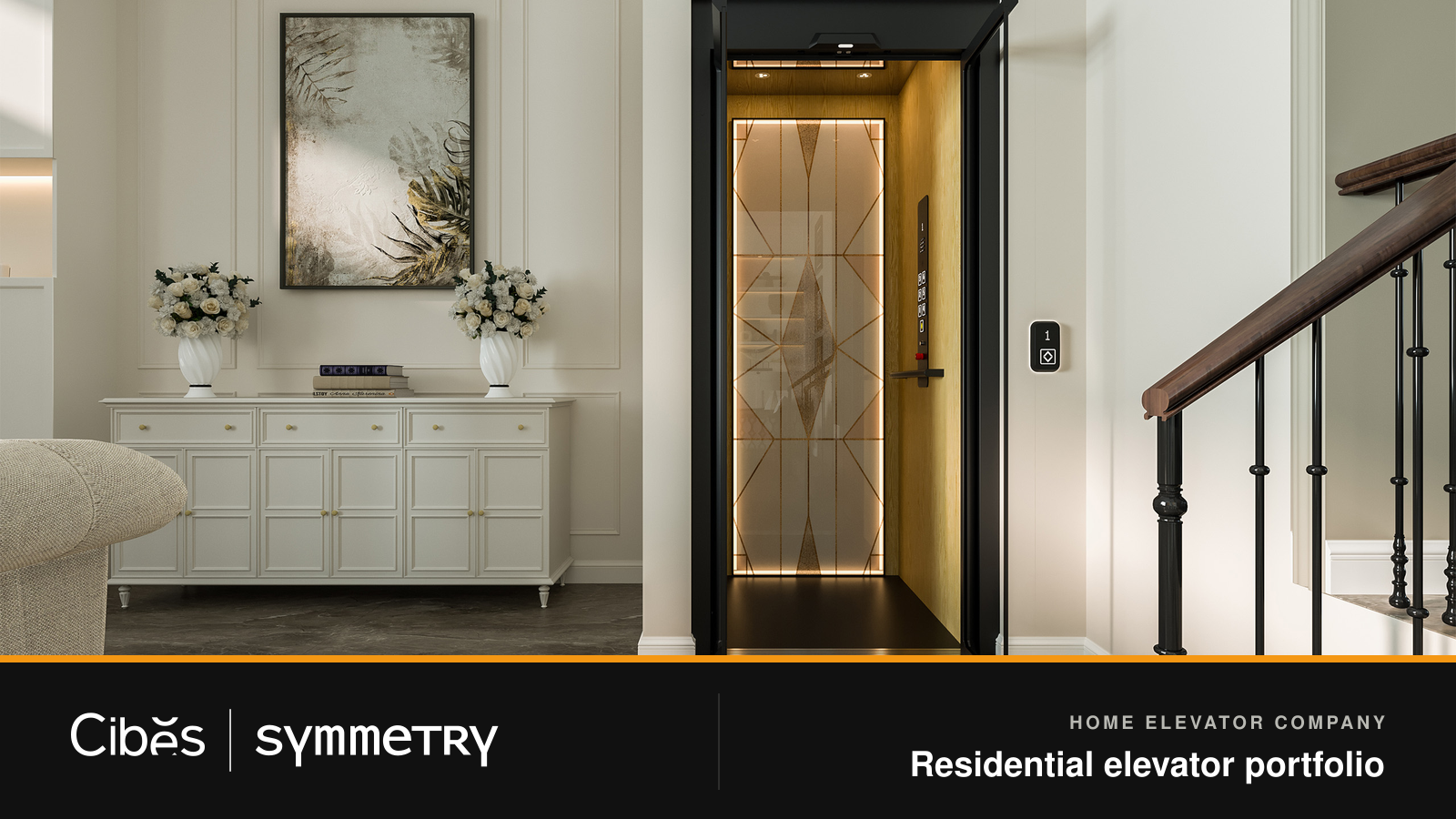
Cibes Symmetry offers traditional residential, through-the-floor, and luxury home elevators. They also manufacture other vertical transportation systems, such as Lula lifts, platform lifts, and low-rise commercial elevators.
Founded in Sweden in 1947, Cibes celebrated its 75th Anniversary in 2022. That same year, Cibes Lift Group purchased Bella Elevator LLC, the U.S.-based manufacturer of Symmetry Elevating Solutions. As a result, the new company was named Cibes Symmetry, combining Swedish screw-driven technology with existing U.S. manufacturing capabilities and adding over 30 years of residential elevator experience.
The drive type depends on the model you choose. The Cibes Antera and Ascenda are both screw-driven. Traditional Symmetry residential units can be ordered with either an inline gear system or hydraulic system.
Savaria
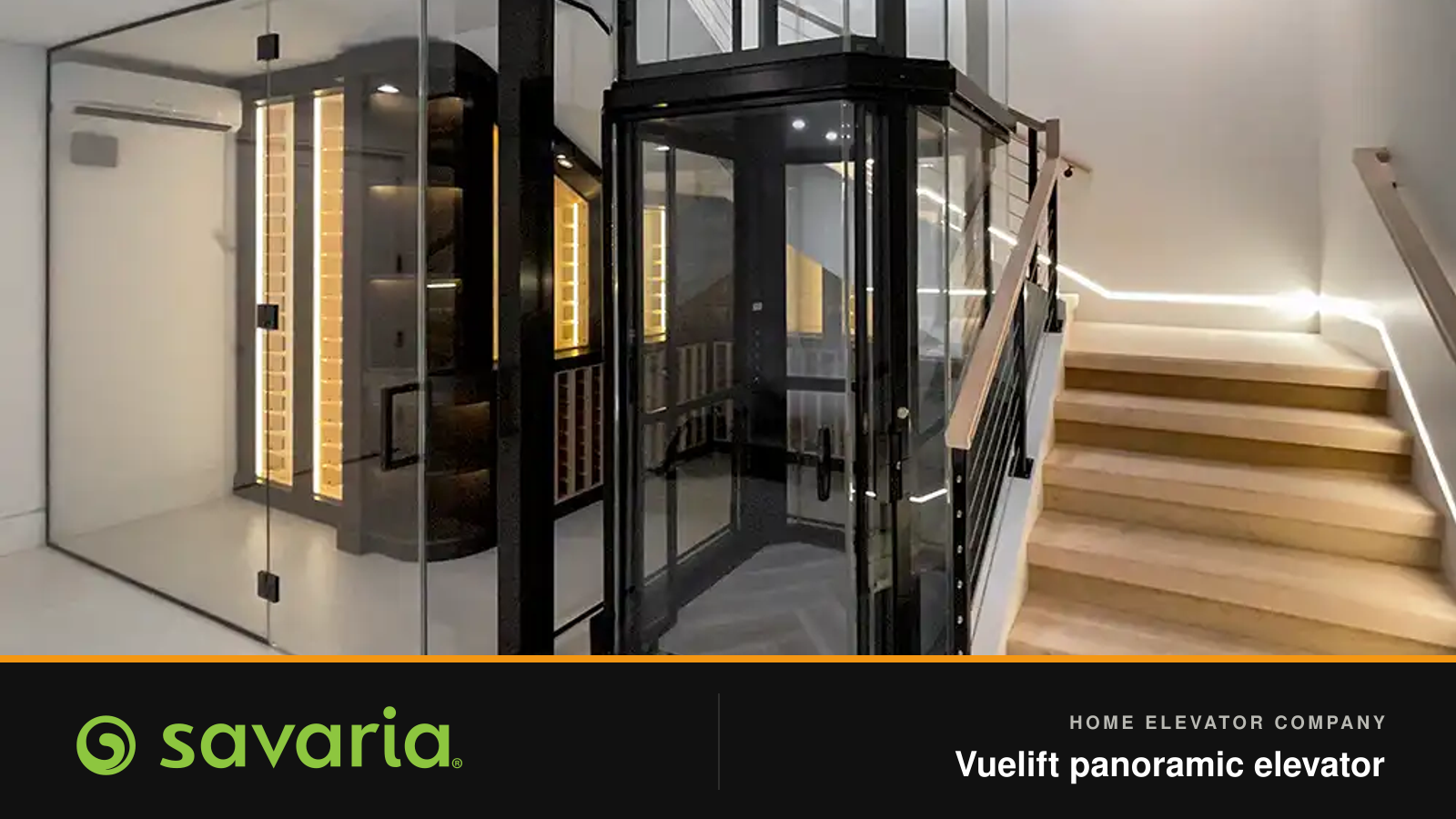
Savaria offers three classic home elevator systems, plus a separate panoramic line. Savaria’s current product comparisons include the geared, chain-driven Eclipse model; the hydraulic-driven Infinity model; and the geared, rope-driven Zenith model. All three are conventional residential elevators that require installation in a pre-constructed hoistway.
Savaria’s Vuelift product is an enclosed style that uses a drum-type system and houses the elevator car in a round or octagonal enclosure. As a result, Savaria meets the needs of both customers seeking a traditional residential elevator and those interested in a high-end, glass design.
Stiltz
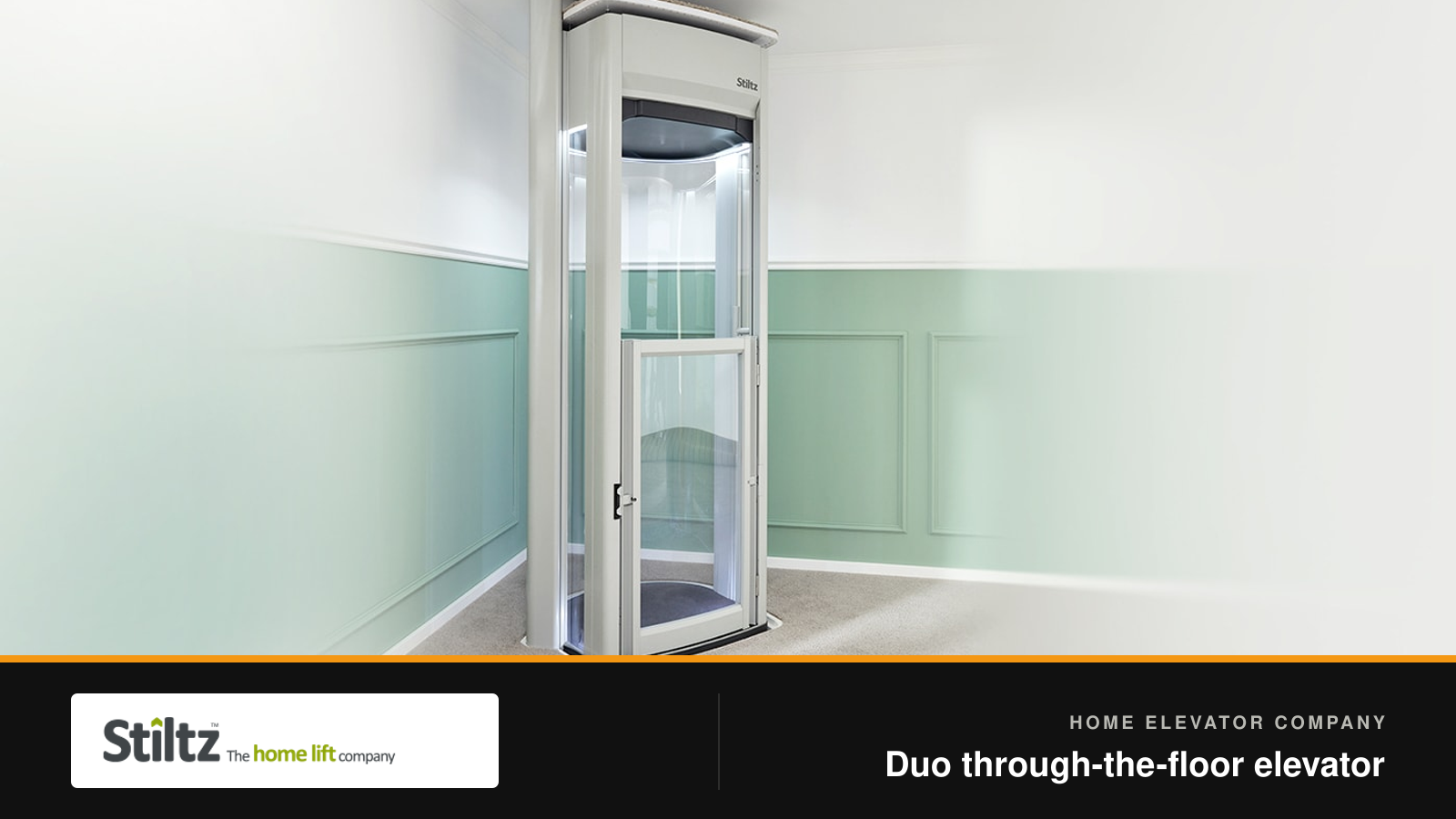
Stiltz specializes in through-the-floor residential home lifts. The company offers two model lines: the Duo series carries standing passengers, while the Trio series accommodates a wheelchair user plus an additional standing passenger. Unlike traditional home lift systems, this design doesn’t require a load-bearing wall because a self-supporting pair of vertical rails supports its weight and keeps the entire system off the floors below.
Pneumatic Vacuum Elevators
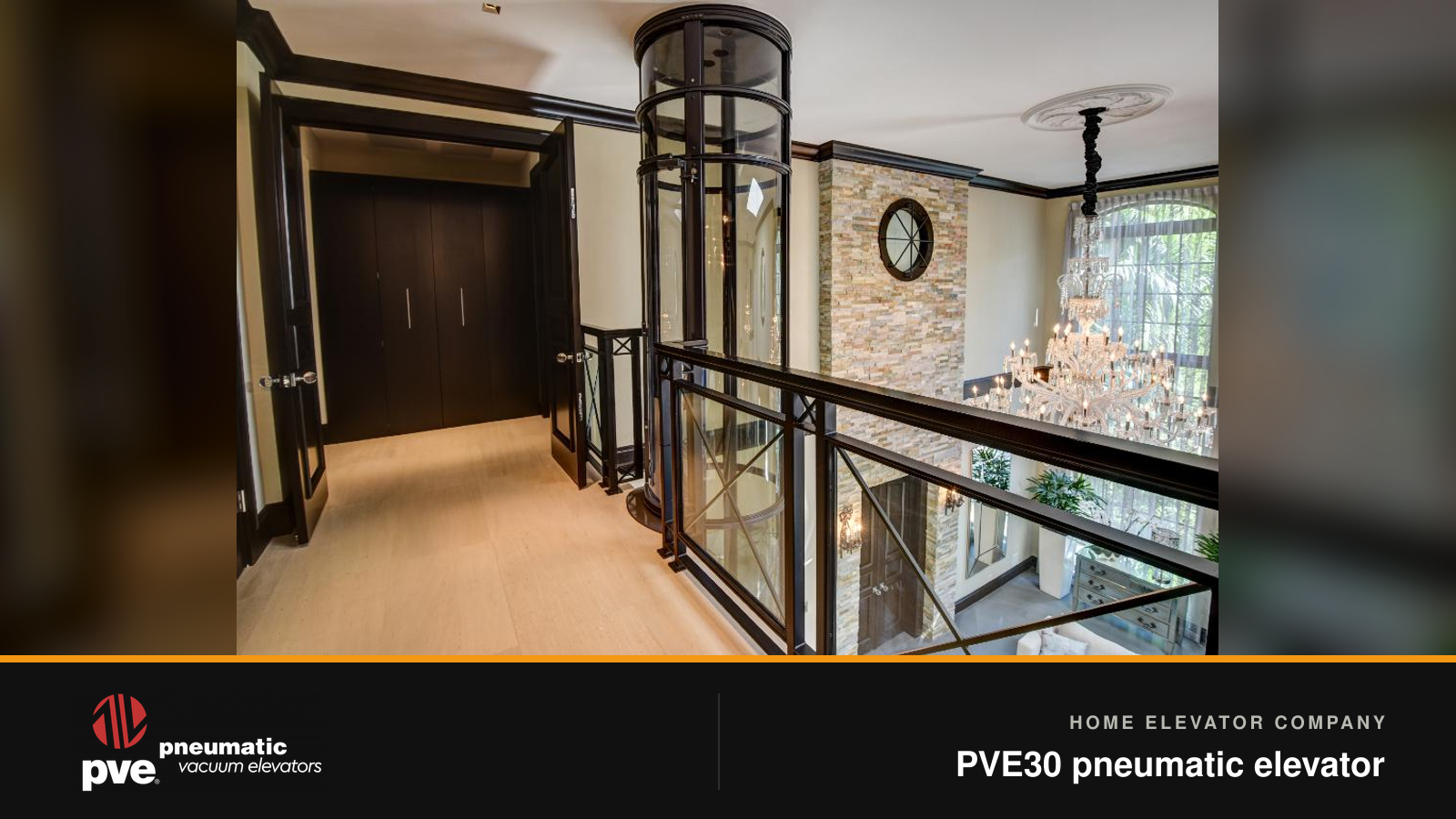
Pneumatic Vacuum Elevators creates residential elevators with air-powered movement. Their products include (but are not limited to) the PVE30, PVE37, and PVE52, all of which operate in a clear cylindrical shell. The company’s “Cube” is another product that operates from a square base.
The elevation occurs because the vacuum system creates a pressure difference within the cylinder. Conventional elevators require a traditional hoistway or machine room. Pneumatic currently produces models that will accommodate one, two, or three passengers. A wheelchair-accessible model is also available
US elevator companies by the numbers
Once each manufacturer’s approach is clear, the published numbers make the differences easier to see. A comparison table is given below.
| Company and representative model | Guide price band | Published footprint or cut-out | Rated capacity | Maximum travel | Stops |
|---|---|---|---|---|---|
Cibes Symmetry Ascenda |
$35,000–$50,000 standard residential guide band | S hatch cut-out: 36″ × 44½” XL hatch cut-out: 54″ × 58½” |
770 lb | 14 ft | 2 |
Savaria Vuelift |
$100,000+ luxury guide band | 50″ footprint 46″ floor cut-out plus approximately 3″ for trim rings |
500 lb | 50 ft 55 ft with variance |
Up to 6 |
Stiltz Duo Alta |
$35,000–$45,000 high-end residential guide band | Floor cut-out: 41¼” × 31⅞” 8.5 sq. ft. footprint |
375 lb | 14′ 9⅛” | 2 floors |
Pneumatic Vacuum Elevators PVE30–PVE52 |
Quote required; varies by model | 30″ to 52 11/16″ external diameter | 350–525 lb | 50 ft | 2–5 |
Comparing brands for a two-story home?
Tell us about your home and who will use the elevator. We’ll help you see whether Ascenda fits your space and what an installed price could look like.
What about Otis, KONE, Schindler, and TK Elevator?
The “Big Four” of commercial passenger elevators (Otis), multifamily residential elevators (KONE), and commercial and multifamily building escalators (Schindler & TK Elevator) tend to dominate conversations about elevators. But they don’t focus on manufacturing home elevators, and thus, are not included on this list.
Designed for private residences under the residential elevator section of the applicable code. Product choice centers on the home, occupants, space, and number of levels.
Designed for larger buildings with different traffic, accessibility, construction, and operational requirements.
A LULA (Limited Use / Limited Application) elevator sits between these two types. The LULA is a code-defined passenger elevator that will serve the needs of many eligible low-rise buildings. These include schools, churches, public libraries, and many multifamily residential buildings, etc. When local codes permit, and the building meets the necessary requirements, LULAs can provide in-building accessibility. The LULA elevator cannot be categorized the same way as a home elevator used by individual homeowners.
How should you compare home elevator brands?
Compare home elevator brands by matching the product to the home before comparing finishes or promotional claims. Use the same six questions for every manufacturer and dealer so each proposal covers the same scope.
- What drive type fits the project? Screw, inline gear, hydraulic, wire-rope, winding-drum, and pneumatic systems use different equipment layouts. Ask how the drive affects the opening, pit, hoistway, machine space, power supply, ride, and maintenance plan.
- What footprint and opening does the home need? Compare the complete installation footprint, not only the standing space inside the elevator. Include the enclosure or hoistway, floor opening, landing clearance, headroom, and required working space.
- Who and what must the elevator carry? Confirm rated capacity and usable dimensions. A standing passenger, a person using a walker, and a wheelchair user need different entry and interior space.
- Which car door options are available? Ask whether the car door operates automatically or manually. Also confirm the landing-door arrangement, clear opening, entry direction, and how the doors coordinate with nearby walls or furniture.
- What does the warranty cover? Request the written product and installation warranties. Check the term, covered parts, labor rules, registration requirements, exclusions, and maintenance conditions before signing.
- Who provides local service? Confirm who will install the elevator, perform required inspections, complete planned maintenance, answer service calls, and obtain replacement parts. Ask how quickly that team normally responds in your area.
Get Ascenda offers in your inbox
Still weighing your options? Leave your email and be the first to hear about Ascenda promotions, seasonal offers and new size options. No spam, and you can unsubscribe anytime.
[Email signup form goes here: email field + “Send me offers” button]
By subscribing, you agree to receive marketing emails from Ascenda.
Where does Ascenda fit?
Ascenda fits the through-the-floor category for homeowners who need travel between two levels without building a traditional hoistway. It uses a fitted opening on the upper floor or an approved existing void. The system has a zero-inch pit, no separate machine room, and a screw drive integrated with the elevator structure.
We offer Ascenda in S, M, L, and XL sizes. The current product information lists a 770-pound rated load, travel up to 14 feet, two stops, and a speed of 30 feet per minute. The right size depends on the users, entry path, available floor area, and final approved drawings.
Ascenda is one part of the wider Cibes Symmetry residential range. That connection gives a homeowner access to a manufacturer that also makes traditional residential and luxury elevators. It also provides an authorized dealer network for planning, installation, and service.
Explore our through-the-floor home elevator and review the four Ascenda sizes and technical information. An authorized dealer can then complete a site assessment and confirm whether the product fits the home.
Is Ascenda the right elevator for your home?
Start with the space, the people who will use the elevator, and the service available at your address. A local assessment can turn those needs into an approved product plan.
What do buyers ask about home elevator companies? FAQ
Buyers often ask which brand is best, which companies dominate the commercial elevator market, and who makes through-the-floor models, etc. They also want to know how long an elevator can stay in service and whether manufacturers offer nationwide installation.
What is the best home elevator brand?
Cibes Symmetry. The best home elevator brand is the one whose product fits the user, but for general quality and both international and national recognition. Cibes Symmetry is usually the elevator of choice.
Who are the big four elevator companies?
The term “big four” refers to Otis, KONE, Schindler, and TK Elevator. These companies primarily produce products for commercial, multi-family, institutional, and high-rise applications throughout the U.S., and also perform maintenance and modernization work.
Who makes through-the-floor elevators?
Cibes Symmetry makes the through-the-floor Ascenda elevator, and Stiltz makes the Duo and Trio through-the-floor ranges.