
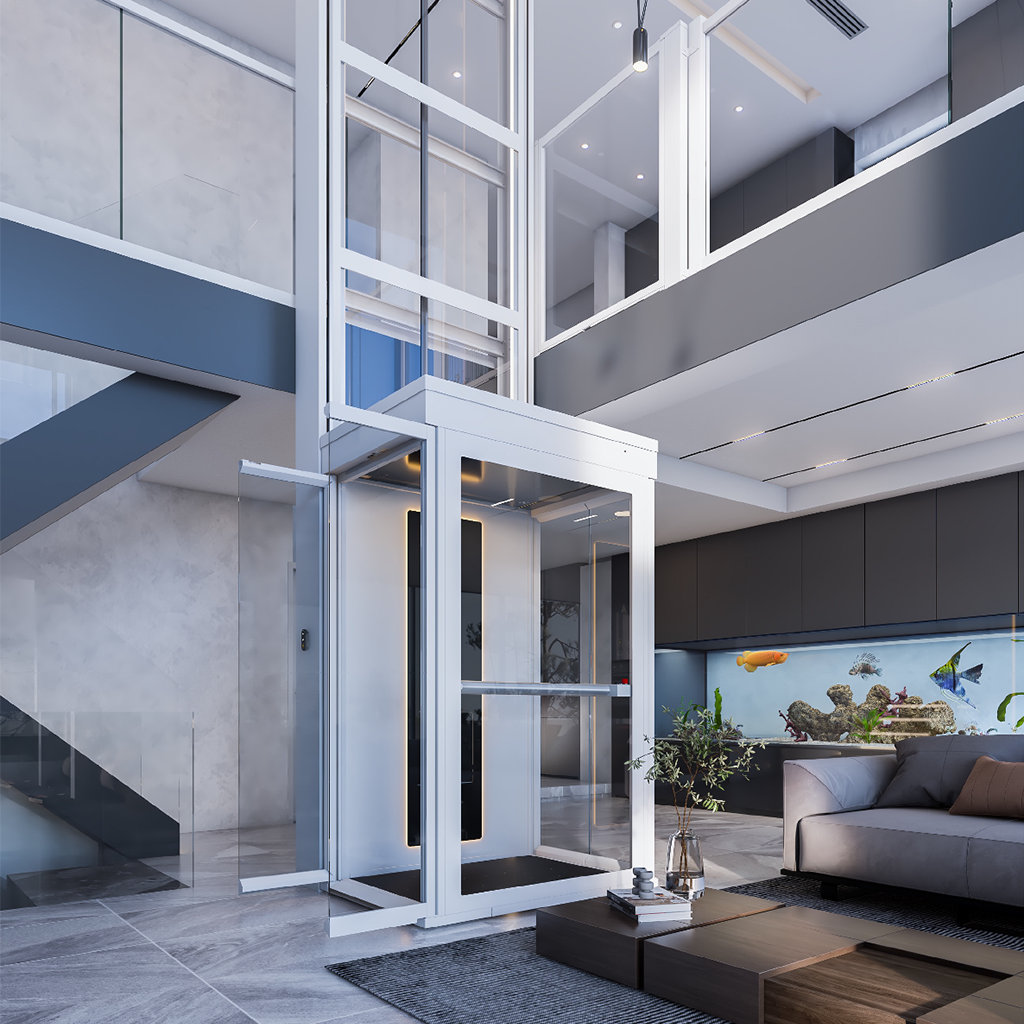
Standard residential and through-the-floor elevators cost anywhere from $25,000 to $50,000. An upscale residential elevator will cost around $50,000 to $80,000. Luxury designs can go for $80,000 or more when fully installed. As a through-the-floor residential elevator model, Ascenda starts at $35,000.
Quick answer: First, determine the type of elevator, then estimate the cost of the equipment needed to install your home elevator versus the labor to do the work. A TFL elevator requires a pre-cut hole in the floor rather than the typical wall around a shaft or hoistway.
How much does a home elevator cost?
Most home elevator construction projects have a specific price bracket. Standard and through-the-floor models range from $25,000 to $50,000. Higher-end residential elevators range from $50,000 to $80,000. Luxury models begin at approximately $80,000. Depending on size, materials, and special features, prices can be much higher.
The prices mentioned above are general estimates. Your final costs will depend on the type of elevator you want to purchase and the work needed in your home to accommodate it.
When requesting a quote, ask for a detailed description of the specific elevator model and all additional items included in the installation process. Make sure the quote clearly states any local taxes, shipping fees, or other costs associated with installing the elevator.
| Elevator type | Installed planning range | What the range covers | Space and building work |
|---|---|---|---|
| Traditional residential | $25,000 to $50,000 | Base elevator and standard installation within the stated project assumptions | A model-specific car footprint plus a code-compliant hoistway. Our through-the-floor design uses one fitted upper-floor opening or an approved existing void. |
| High-end residential | $50,000 to $80,000 | Elevator, standard product configuration, and installation within the quote | Varies by model. |
| Luxury | $80,000+ | Premium glass architecture, finishes, and model-specific installation | Freestanding or hoistway-based footprint that varies by design |
Want a price for your home, not a national range?
Tell us about your two levels and the space you have in mind. We’ll help you work out which Ascenda size fits and what the installed price could look like.
How much does a small home elevator cost?
A small high-end residential elevator generally falls within the $25,000 to $50,000 installed price range used in this guide. Because Ascenda is a small-footprint home elevator, it generally falls into this tier as well. Especially with the S and M Ascenda models, they use less floor area, so the entry price is much lower for both the unit price and installation costs.
Standing space: 27 3/4 × 23 3/4 inches
Hatch cut-out: 36 × 44 1/2 inches
Standing space: 27 3/4 × 31 1/2 inches
Hatch cut-out: 36 × 52 1/4 inches
These dimensions are based on our current lift information. Final approved project drawings account for local code and site requirements.
What drives the price of a home elevator?
The main factors affecting elevator pricing include labor, installation costs, new build vs. retrofitting, and other variables. That being said, the main drivers of the price are as follows:
Hoistway or through-the-floor opening
A traditional elevator needs an enclosed shaft called a hoistway. Building one may involve new walls, framing, and landing entrances. An existing home may also need structural changes to accommodate the shaft.
Hoistway construction costs
| Building work | Estimated cost bracket |
|---|---|
| Hoistway framing in a new home | $5,000–$12,000 |
| Hoistway construction in an existing home | $8,000–$20,000+ |
| Pit excavation, if required | $2,000–$5,000 additional |
These construction estimates include only the labor cost to install the elevator. Please confirm whether these estimates should include engineering, permits, electrical work & finishing. Our Ascenda through-the-floor design uses one pre-cut opening at the top floor or an existing void approved by the local building authority. The smallest hatch cut-out is 36″ x 44-1/2″. Each opening size has its own.
Number of stops and travel height
More floors generally mean a higher installation cost. Each additional stop adds another landing entrance, controls, and installation work.
| Number of stops | Estimated increase over a two-stop installation |
|---|---|
| Two stops | Base installation price |
| Three stops | $8,000–$12,000 additional |
| Four stops | $16,000–$24,000 additional |
Additional stop estimates in this section apply to new elevators that include an additional stop. For four stops, we estimate two additional stops at about $ 8,000- $ 12,000 each. Building alteration costs will be additional. If you need more than two stops or longer travel distances, a different elevator might work better.
Size: S, M, L, and XL
Larger elevator cars need larger openings and more clear space at the landing. Choose a size that matches your needs. The smallest model may suit standing passengers, while a household planning for a wheelchair or caregiver should begin with the required turning, approach, and entry space.

| Size | Standing space | Car cut-out | Hatch cut-out | Maximum rated load |
|---|---|---|---|---|
| S | 27 3/4 × 23 3/4 in. | 32 1/4 × 41 3/4 in. | 36 × 44 1/2 in. | 770 lb. |
| M | 27 3/4 × 31 1/2 in. | 32 1/4 × 49 5/8 in. | 36 × 52 1/4 in. | 770 lb. |
| L | 27 3/4 × 39 1/2 in. | 32 1/4 × 57 1/2 in. | 36 × 60 1/4 in. | 770 lb. |
| XL | 49 1/4 × 33 1/2 in. | 54 7/16 × 51 3/16 in. | 54 × 58 1/2 in. | 770 lb. |
Source: Ciges lift information. Thes figures are subject to differnet variables such as local regulation.
Car door, finish, and glass
Automatic doors and premium finishes can add thousands of dollars to a home elevator quote. Check which features are included in the base model before comparing prices.
| Upgrade or finishing work | Estimated cost |
|---|---|
| Automatic door upgrade | $2,500–$5,000 additional |
| Premium interior package, such as hardwood panels, glass walls, or decorative metal finishes | $1,500–$8,000 additional |
| Surrounding interior trim installation | $4–$10 per linear foot |
The great part about Ascenda is that it includes automatic saloon car doors and an all-glass mast and car as standard, which can help keep upgrade costs down.
Electrical and site work
Electrical work and changes around the elevator opening add to the installation budget. Costs depend on several variables as seen below:
| Work required | Estimated cost |
|---|---|
| New dedicated electrical circuit | $250–$900 per circuit |
| Electrical panel upgrade to 200 amps | $2,500–$4,500 |
| Rerouting existing electrical wiring: labor only | $50–$100 per hour |
| Basic plumbing rerouting through more involved alterations | $500–$6,000+ |
| Ductwork rerouting | $25–$55 per linear foot |
| Reinforcing existing floor joists by sistering, where specified | $150–$325 per joist |
What does installation add to the price?
Home elevator installation labor can add $8,000–$20,000 to the equipment price, with structural alterations, permits, labor and electrical work potentially costing extra. Installation is a process, as seen in the photo below:
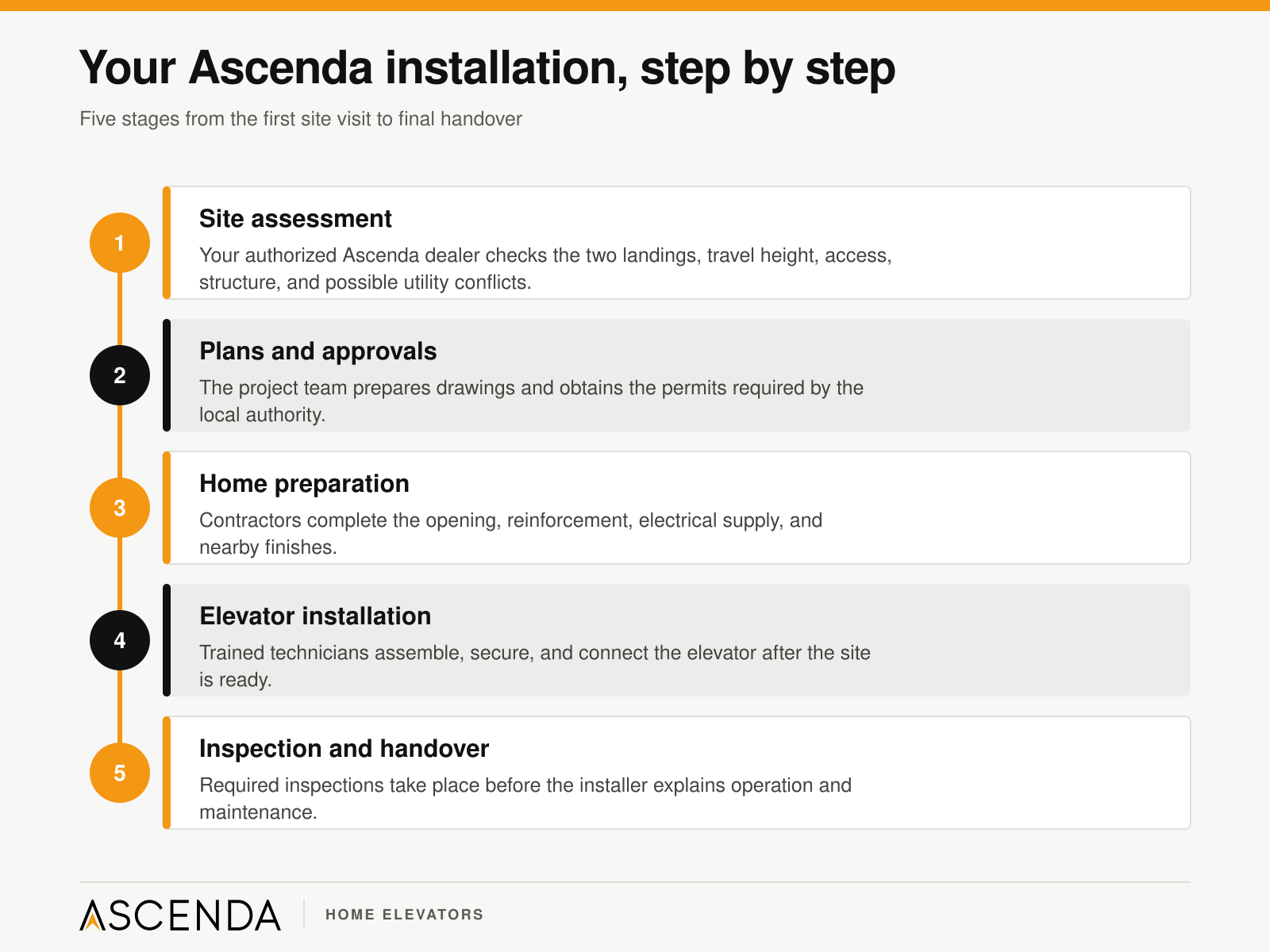
Equipment installation is only one part of the schedule. Structural work and permits may begin earlier and finish later. For the complete sequence, see our home elevator installation guide.
Is a home elevator tax deductible?
Yes, it is. You do not have to claim your home elevator as a deduction. According to IRS Publication 502, you can deduct a home elevator as part of your medical expenses if you installed it for a disability or health issue. When you install a home elevator to improve mobility due to a disability or health concern, the IRS lets you deduct the installation cost, minus any increase in your home’s market value.
For example, the IRS uses this specific example: If you installed an elevator at a total cost of $60,000. After installing the elevator, the increased value of your residence is estimated at approximately $20,000. Therefore, you could subtract the increased value ($20,000) from the total cost ($60,000), resulting in an additional allowable expense of $40,000 (as a medical expense).
| Calculation or rule | Amount or requirement |
|---|---|
| Qualifying elevator project cost | $60,000 |
| Increase in the home’s value | − $20,000 |
| Starting medical-expense amount | $40,000 |
| 2025 deduction threshold | Eligible medical and dental expenses must exceed 7.5% of adjusted gross income |
| How the deduction is claimed | Itemized on Schedule A |
Get the Ascenda brochure
See all four sizes, specs and finishes. Enter your email and we’ll send it straight over.
Where does Ascenda fit in the home elevator cost range?
Our through-the-floor Ascenda elevator sits in the standard residential tier. It connects two levels without a traditional hoistway, pit, or separate machine room. That design helps limit building work, especially in a home not planned around an elevator.
Our design combines Cibes Symmetry engineering with four size options. The elevator carries up to 770 pounds, travels up to 30 feet per minute, and covers up to 14 feet between two stops. The glass car and mast also allow it to share light with the surrounding room.
For early planning, use $25,000 to $50,000 installed. Your exact Ascenda price depends on size, approved configuration, location, and the work required in your home. Explore our home elevator, then review our sizes and technical information before requesting a site assessment.
What will an Ascenda elevator cost in your home?
A site assessment can confirm the right size, identify the required building work, and turn a national planning range into a project-specific quote.
What questions do homeowners ask about elevator cost?
Homeowners most often ask about small-elevator pricing, the cost of adding a system to an existing house, the lowest-cost elevator type, possible tax treatment, and resale value. The answers below use the same planning ranges as the main article, but a site assessment is still required for an accurate project quote.
How much does home elevator maintenance cost per year?
Budget around $300–$600 per year for a home elevator maintenance contract. The price depends on the model, your location and the service included. Ask whether the agreement covers replacement parts and emergency callouts or charges for them separately.
What should you budget for major repairs as a home elevator ages?
Major component replacements can cost $5,000–$15,000 after around 15–20 years, according to Pollock Residential Elevators. This is a long-term planning allowance, not a bill every owner will face at that age. The work needed depends on the equipment’s condition and maintenance history.
